Cart abandonment costs ecommerce brands over $260 billion in lost revenue every year, according to Baymard Institute. With an average abandonment rate of 70.22%, most brands pour resources into recovery emails and retargeting ads. But what if you could stop shoppers from leaving in the first place?
AI shopping assistants are shifting the playbook from reactive recovery to proactive prevention. Instead of chasing shoppers after they leave, these assistants resolve hesitation, answer questions, and remove friction while the shopper is still on your site. Here are seven ways they do it.
Why Prevention Beats Recovery
Most ecommerce teams treat cart abandonment as a post-checkout problem. A shopper leaves, and the brand triggers an email sequence or a retargeting ad. Recovery rates for these tactics hover around 5-10%, and Forrester research shows that proactive customer engagement delivers 105% ROI compared to just 15% for reactive outreach.
The math is simple: preventing one abandoned cart is worth more than recovering seven. Recovery emails compete with crowded inboxes. Retargeting ads face ad blockers and declining cookie support. Prevention, on the other hand, works at the exact moment a shopper is ready to buy.
For recovery strategies after abandonment happens, read our complete AI cart recovery playbook. But if you want to stop the bleeding at the source, prevention is where the highest-ROI opportunity lives.
How AI Shopping Assistants Detect Purchase Hesitation
Before an AI shopping assistant can prevent abandonment, it needs to recognize when a shopper is wavering. Modern AI systems analyze behavioral signals in real time: scroll depth that stalls on sizing charts, mouse movements that hover over the back button, back-and-forth toggling between two similar products, and extended dwell time on shipping or return policy pages.
According to Search Engine Journal, AI hesitation detection now operates within a 2-4 second prediction window. A Fortune 100 retailer using these behavioral signals reported 37% higher conversion rates and 22% fewer returns, because the AI addressed doubts before they turned into drop-offs.
These signals power every prevention strategy below. The AI doesn't wait for a shopper to leave. It intervenes at the first sign of hesitation.
7 Ways AI Shopping Assistants Prevent Cart Abandonment
1. Resolving Product Questions Before Doubt Sets In
Forrester reports that 50% of online shoppers abandon a purchase when they can't find quick answers to their questions. That's half your potential revenue lost to unanswered sizing questions, compatibility confusion, or missing material details.
AI shopping assistants sit on the product detail page and cart page, ready to answer questions instantly. "Will this laptop bag fit a 15-inch MacBook?" "Is this moisturizer safe for sensitive skin?" "Does this router work with my mesh setup?" The AI pulls answers from your product catalog, specs, and knowledge base without making the shopper hunt through tabs or FAQ pages.
An AI support concierge turns every product page into a conversation, not a dead end.
2. Guided Selling That Builds Buyer Confidence
The famous jam study showed that shoppers presented with 6 options purchased at a 30% rate, while those facing 24 options purchased at just 3%. Choice overload is a silent cart killer. Dynamic Yield data confirms that 76% of fashion shoppers don't buy after their first product click, often because they aren't confident they've found the right item.
AI shopping assistants act as personal consultants. They ask about preferences ("What's your skin type?", "What room size are you furnishing?") and narrow the catalog to 2-3 best-fit options. This guided selling approach builds the confidence that turns browsers into buyers.
3. Surfacing Costs and Policies Proactively
Baymard Institute's research identifies unexpected extra costs as the number one abandonment trigger, responsible for 39% of all abandonments. Shoppers add items to their cart, reach checkout, and discover shipping fees, taxes, or handling charges they didn't expect.
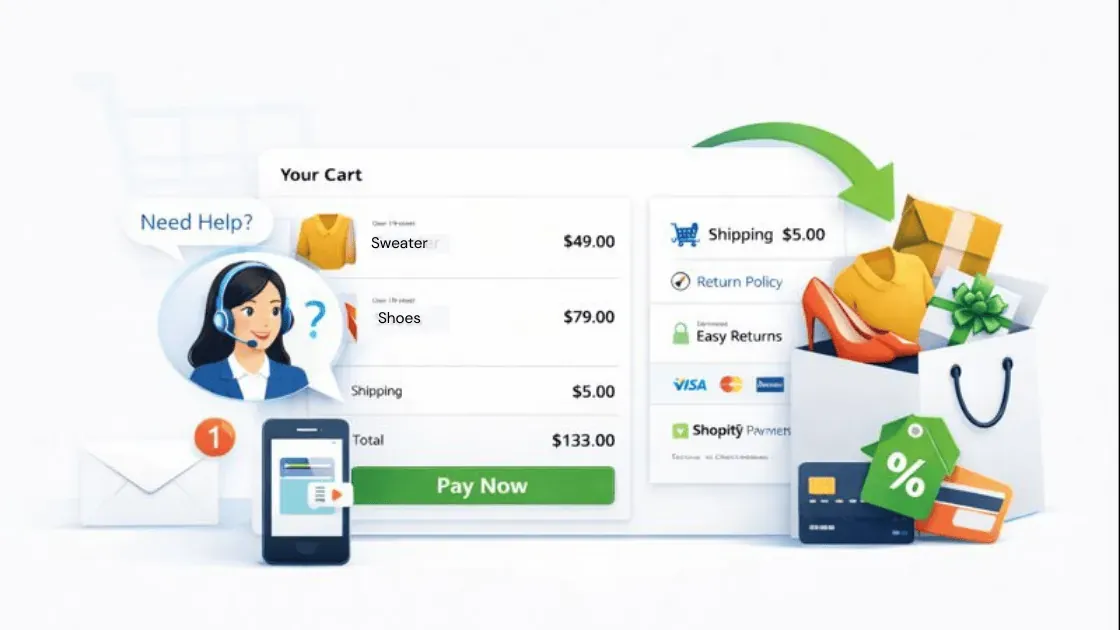
AI assistants eliminate this surprise by surfacing total cost estimates, shipping timelines, and return policies proactively. Before a shopper even reaches checkout, the AI can say: "Your order total with shipping to Austin, TX is $47.95. Free returns within 30 days." No surprises, no sticker shock, no reason to leave.
4. Exit-Intent Intervention with Context
Generic exit-intent popups ("Wait! Don't go! Here's 10% off!") convert at low single-digit rates because they ignore the reason the shopper is leaving. AI-powered intervention is different. It reads the behavioral signals, identifies the specific hesitation point, and delivers a contextual response.
If the shopper lingered on the shipping page, the AI might surface a free shipping threshold: "Add $12 more for free shipping." If they toggled between two products, the AI highlights the key difference: "The Pro model includes the carrying case you viewed." This context-aware approach turns a blunt retention tool into a precision instrument.
5. Agentic Checkout That Removes Friction
Complex checkout processes drive 18% of all cart abandonments, per Baymard. Every extra form field, every page load, every "create an account" gate is another exit ramp. Agentic AI shopping assistants collapse this friction by handling checkout conversationally.
The AI can populate the cart, pre-fill shipping and payment fields from prior sessions, and enable conversational ordering ("Add the blue version in medium and check out with my saved card"). Understanding the root causes helps too. Our breakdown of the 10 biggest checkout friction points maps every common blocker.
6. Cross-Device Context That Keeps the Sale Alive
Shoppers frequently start browsing on mobile and switch to desktop to complete a purchase. Without continuity, they lose their cart, their product research, and their momentum. That context loss alone causes an estimated 30% of cross-device abandonment.
AI shopping assistants maintain conversation context across devices and channels. A shopper who asked about sizing on mobile sees that same context when they open the desktop site. AI social commerce extends this continuity to WhatsApp, Instagram DMs, and other messaging platforms, so the conversation (and the sale) never breaks.
7. Turning Reviews into Real-Time Reassurance
At the moment of doubt, shoppers want to hear from other buyers. But scrolling through hundreds of reviews to find the one that answers "Is this true to size?" takes time and patience that most shoppers don't have. 93% of consumers say online reviews influence their purchase decisions (Podium).
AI assistants synthesize verified reviews on demand. A shopper asks "Do people find these running shoes comfortable for wide feet?" and the AI instantly surfaces relevant review excerpts: "12 reviewers with wide feet rated comfort 4.7/5." This delivers social proof at the exact moment it matters most.
What This Looks Like in Practice
Prevention-first AI isn't theoretical. Brands are already seeing results. Victoria Beckham deployed an AI shopping assistant and saw a 20% increase in average order value alongside 10% revenue growth, driven by the assistant's ability to guide product selection and answer questions before doubt set in.
Tatcha experienced a 3x lift in conversion rates after implementing AI-guided selling that matched shoppers to the right skincare routine. Booking.com reported a 20% increase in bookings after deploying an AI assistant that proactively addressed trip-planning hesitation.
For a Shopify-specific look at how AI compares to email recovery, see our Shopify cart abandonment guide.
How Alhena AI Prevents Abandonment Differently
Alhena AI takes a specialized approach to prevention with two dedicated agents. The Product Expert agent handles pre-sale questions, guided selling, and product comparisons. The Order Management agent handles post-sale inquiries, shipping status, and returns. This separation means each agent is trained for its specific role rather than being a generic chatbot.
Every response is hallucination-free, grounded in your actual product catalog and policies. Alhena works across web chat, email, WhatsApp, Instagram DMs, and voice, so prevention happens on every channel where your shoppers are. Deployment takes 48 hours, not months.
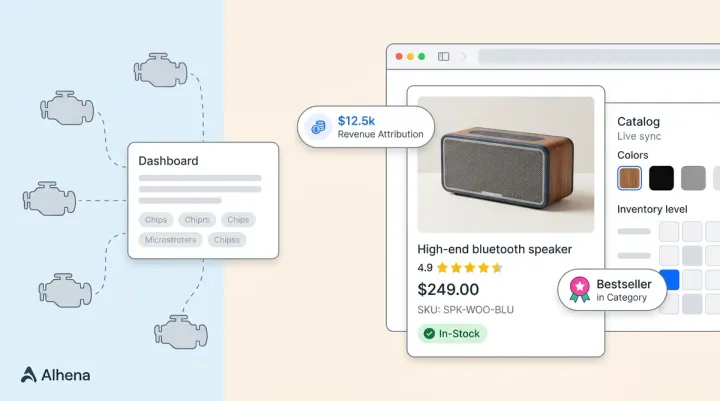
The platform includes agentic checkout capabilities and revenue attribution analytics, so you can track exactly how many abandonments the AI prevented and how much revenue it protected. That's the difference between guessing and knowing.
Getting Started with Prevention-First AI
Shifting from recovery to prevention starts with three steps. First, map your friction points. Look at where shoppers drop off in your funnel: product pages, cart, checkout, or somewhere else. Second, deploy an AI shopping assistant that can intervene at those specific moments. Third, measure prevention KPIs, not just recovery rates. Track hesitation-resolved conversations, questions answered before checkout, and abandonment rate changes.
Use our ROI calculator to estimate the revenue impact of moving from recovery to prevention. The numbers speak for themselves: 105% ROI on proactive engagement vs. 15% on reactive recovery.
Ready to stop cart abandonment before it starts? Book a demo with Alhena AI or start for free with 25 conversations.
Stop Cart Abandonment Before It Starts
Alhena AI deploys in 48 hours. See how prevention-first AI protects your revenue.
Book a Demo Start Free