Food and beverage ecommerce is growing at 15.1% annually, more than 16 times the growth rate of overall food sales, according to Shopify. The global direct to consumer food market, where brands are selling product straight to buyers, is on track to reach $195 billion by 2031. But for every brand riding this wave, a familiar problem surfaces: customers love the first box, skip the second, and cancel by month six. The combination of perishable logistics, high-touch order management, and subscription fatigue makes food and beverage one of the hardest ecommerce categories to retain customers in.
AI is changing that equation and helping brands optimize the entire customer experience. From automating "where is my order" tickets for time-sensitive deliveries to predicting which subscribers are about to churn, AI is among the best, and AI best practices give DTC food brands to boost efficiency, manage orders at scale, and keep customers engaged and coming back. This guide covers the top use cases for how AI solves the two biggest challenges in food and beverage ecommerce: order management complexity and customer retention.
The Food and Beverage Ecommerce Boom Is Real, and So Are Its Growing Pains
The numbers tell a clear story. Americans spent $327.7 billion on online food and grocery shopping in 2025, up 27.3% from the previous year, according to Digital Commerce 360. US online grocery penetration has climbed to nearly 19%, and Shopify projects consumers will spend $363.8 billion on grocery delivery in 2026.
DTC food brands are grabbing a growing slice of this market. Brands like OLIPOP and Magic Spoon have shown what's possible. OLIPOP grew its DTC business from 5% to 35% of total revenue in a single year. Good Ranchers saw a 10% lift in subscription adoption after migrating to a better ecommerce platform. The category leads all industries with a 7.22% ecommerce conversion rate, according to Justuno.
But growth brings operational strain. Food and beverage brands deal with challenges that a typical apparel, electronics, or traditional food retailer's online store never faces: perishable inventory with tight delivery windows, cold chain logistics that can fail at any handoff point, allergen and dietary questions that carry real health consequences, sustainability concerns, and subscription models where a single bad experience can trigger a cancellation. These aren't minor inconveniences. They're the reason food and beverage has a 64% annual customer churn rate, according to Recurly.
Why Food and Beverage Order Management Is Unlike Any Other Category
When a fashion brand ships a late order, the customer is annoyed. When a meal kit brand ships a late order, the food might be spoiled. That distinction shapes everything about how DTC food brands handle customer service.
Perishable Delivery Creates Urgent Support Tickets
"Where is my order?" tickets make up 30 to 50% of all ecommerce support volume, according to Salesforce. For perishable goods, these tickets carry extra urgency. A delayed shipment of frozen meals or fresh produce isn't just inconvenient. It's a potential food safety issue that needs immediate resolution with replacement logic, not a standard refund flow.
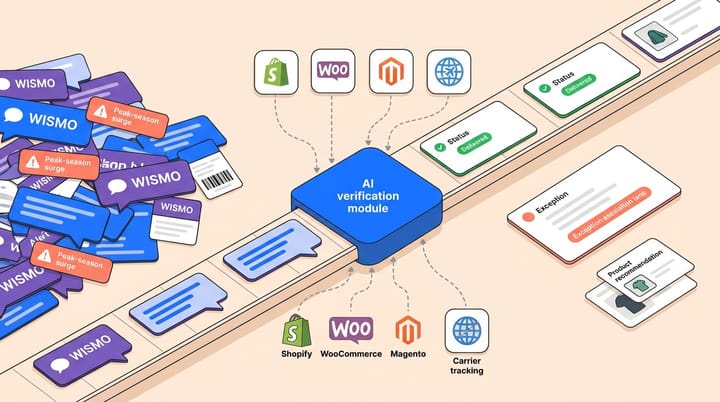
Handling these service calls becomes even harder during seasonal demand spikes and inbound inquiry surges. Holiday gift boxes, summer beverage promotions, and limited-edition flavor drops all create ticket surges that overwhelm lean DTC support teams.
Allergen and Dietary Questions Are High-Stakes
A customer asking "is this gluten-free?" isn't making small talk. They need a precise, accurate answer grounded in verified product data. A standard AI chat bot powered by generative AI and machine learning models can confidently give wrong answers about ingredients, and in food and beverage, a wrong answer can mean a trip to the emergency room. This is exactly the kind of inquiry where AI must be hallucination-free and pull from verified product information.
Subscription Management Is a Constant Balancing Act
Coffee subscriptions churn at 6 to 8% monthly. Curation-style boxes (think curated snack boxes or wine clubs) churn at 10 to 15% monthly, according to Recurly. Much of that churn comes from friction: 12% of subscribers cancel simply because they can't easily pause or skip a delivery. When a customer wants to swap their medium roast for a dark roast, delay their next shipment by a week, or add a limited-edition item to their upcoming box, they expect instant self-service. Most DTC food brands still route these requests through email or a support agent.
The Six-Month Churn Wall Every F&B Brand Hits
Here's a stat that should worry every DTC food brand: the median food and beverage brand loses customers by month six, according to research from Metrilo. Top performers keep growing customer lifetime value beyond month 12, while average brands watch their revenue flatline as early acquisition gains get eaten by churn.
The math is straightforward. F&B subscriptions generate $420 to $720 in lifetime value through high-frequency purchases. The best brands earn $40 more per customer in their first year than median performers. That gap compounds over time, and the difference often comes down to how well a brand handles three things: subscription flexibility, personalized re-engagement, and proactive outreach before a customer decides to leave.
Consider ButcherBox's approach. Their data shows that customers who rate their first meal as successful have significantly higher retention rates, and by the third box, the likelihood of long-term retention jumps. The lesson? The first 90 days are make-or-break, and brands that don't actively nurture customers through that window lose them to the six-month wall.
Adding "skip" and "pause" options alone can reduce voluntary churn by 18% in just 45 days. Hims & Hers found that 25% of customers who would have canceled chose to pause instead when given the option. The pattern is consistent: flexibility saves subscriptions. But offering flexibility at scale requires automation.
How AI Solves Order Management for DTC Food Brands
AI doesn't just answer tickets faster. With advanced capabilities, it changes how food and beverage brands handle the entire order lifecycle, from purchase to delivery to reorder.
Instant, Accurate WISMO Resolution
An AI agent connected to your shipping and logistics systems can resolve order tracking inquiries in seconds, not hours. When a customer asks "where's my smoothie box?", the AI recognizes the intent, pulls real-time tracking data, checks the carrier status, and gives an instant, specific answer: "Your order shipped yesterday via FedEx and is scheduled for delivery tomorrow by 2 PM."
Proactive Delivery Alerts for Perishables
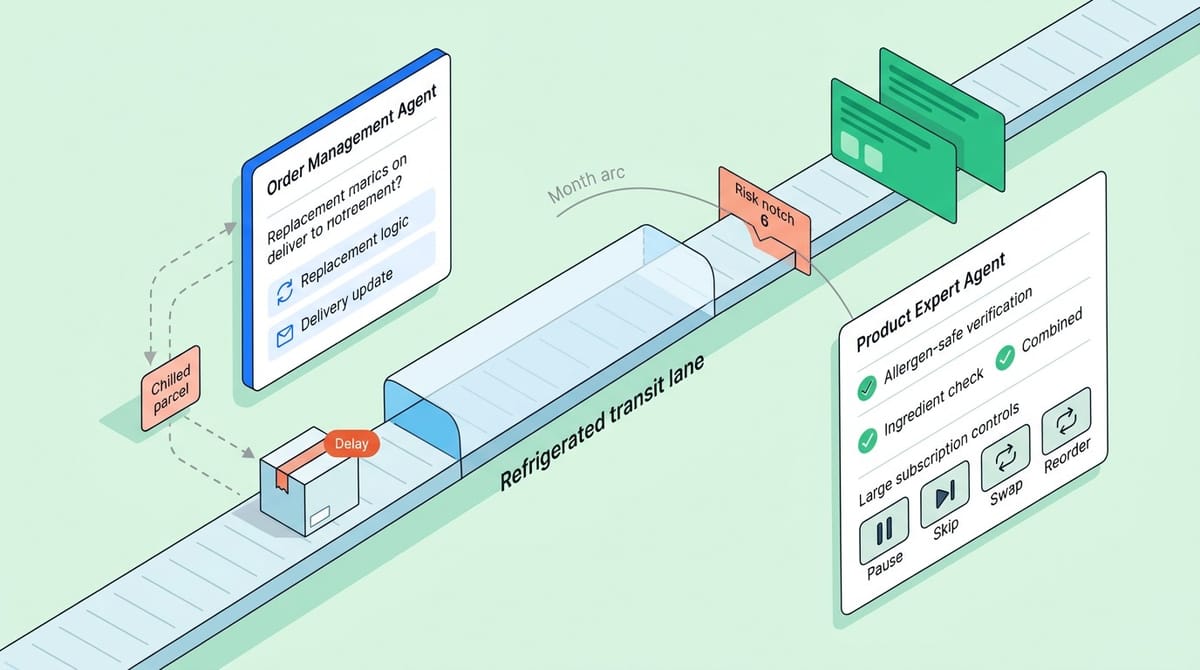
Rather than waiting for customers to ask about their order, AI can monitor delivery status and proactively notify customers of delays, effectively calling customers back. For perishable goods, this is critical. If a cold-chain shipment is running behind schedule, the AI can flag the issue, offer a replacement before the customer even notices, and log the incident for quality tracking.
Self-Service Subscription Changes
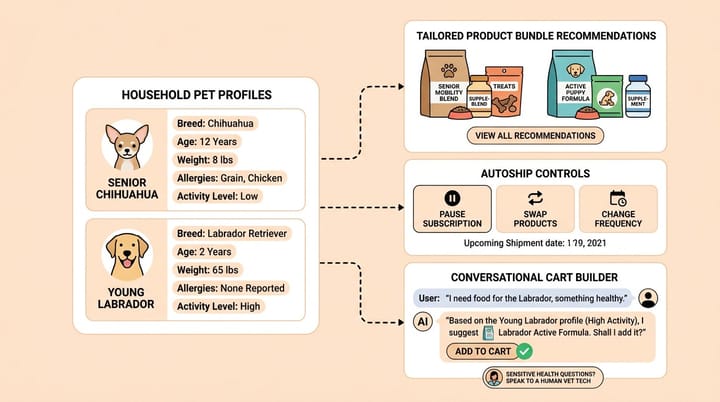
AI-powered support concierges let subscribers pause, skip, swap products, or change delivery frequency through a simple conversation in the chat experience. No waiting for an email reply, no navigating a confusing account portal or form builder on your website. The AI handles the change instantly because it can learn preferences and understand context, confirms it, and even suggests alternatives: "Instead of skipping your next box, would you like to try our new summer flavor collection?"
Allergen and Ingredient Accuracy
An AI agent grounded in your verified product catalog can answer dietary and allergen questions with confidence. When the AI pulls directly from your product data (not from a general language model's training data), customers get accurate, up-to-date ingredient information. This is where hallucination-free AI matters most. A product expert agent that only references your own data eliminates the risk of a chatbot guessing about whether your granola contains tree nuts.
AI-Powered Retention: Turning One-Time Buyers into Repeat Customers
Order management automation is table stakes. The future of AI for food and beverage ecommerce is retention, keeping customers buying month after month.
Predictive Churn Scoring
AI analyzes behavioral signals to flag at-risk subscribers before they cancel. Customers who modify their subscription frequency more than twice are 65% more likely to cancel in the next billing cycle. An AI system that spots this pattern can trigger a targeted intervention: a tailored offer, a check-in message, or a flexible plan suggestion. ButcherBox uses Azure-powered data analytics to identify customer "clusters" with similar buying habits and proactively makes decisions about alternative subscription options to at-risk members.
Personalized Product Recommendations
AI-driven recommendations produce 40% higher conversion rates and 35% larger basket sizes in grocery, according to Grocery Doppio. For DTC food brands, this means an AI that remembers a customer browsing your site prefers spicy snacks, avoids dairy, and tends to reorder every three weeks can suggest the perfect next purchase at exactly the right time.
More than 70% of Instacart users already specify dietary preferences, showing that consumers want this level of personalization. An AI shopping assistant that tracks taste profiles, dietary restrictions, and purchase history can turn a generic "you might also like" into a genuinely helpful shopping experience with personalized recommendations.
Smart Reorder Reminders
About 32.6% of shoppers are willing to let AI reorder staple items when supplies run low, according to an eMarketer survey. For consumable products like coffee, protein powder, or cooking oils, AI can predict when a customer is likely running out based on their order history and send a timely nudge: "Your last bag of espresso blend was 18 days ago. Ready for a refill?" This turns a passive subscriber into an active, engaged buyer.
Post-Purchase Experience That Builds Loyalty
The post-purchase experience is where food and beverage brands win or lose retention. AI handles the moments that matter: confirming delivery of perishable items, following up to ask about product satisfaction, offering recipe suggestions using purchased ingredients, and resolving quality issues instantly. Loyal customers convert at 60 to 70% on repeat purchases versus 5 to 20% for new prospects. Every positive post-purchase interaction compounds that brand loyalty advantage.
How Alhena AI Powers Food and Beverage Ecommerce Brands
Alhena AI offers solutions purpose-built for ecommerce, not retrofitted from a generic support tool. It matches your brand voice. For food and beverage brands, that distinction matters because the platform handles both the sales and support sides of the customer journey.
Two Specialized Agents Working Together
Alhena deploys two AI agents that cover the full customer lifecycle. The Product Expert Agent handles product discovery, dietary and allergen questions, personalized recommendations, and guided selling. It pulls from your verified product catalog and customer data, so it won't hallucinate about ingredients or nutritional information. The Order Management Agent handles everything after the purchase: order tracking, subscription changes, returns, replacements, and delivery issues.
For any DTC food brand or enterprise, this means one AI handles "which protein bar fits my keto diet?" and another handles "my last shipment arrived warm, I need a replacement." Both provide omnichannel support and can help customers quickly with multilingual support in multiple languages across social commerce channels like web chat, email, voice (including outbound calls and handling missed calls from callers), Instagram DMs, and WhatsApp.
Agentic Checkout Drives Conversions
From recovering abandoned carts to recommending products, Alhena goes beyond simple suggestions. It populates the cart and pre-fills checkout, removing friction from the buying process and helping optimize conversions. When a returning customer says "reorder my usual," the AI can build the cart and move them straight to payment. Brands using Alhena have seen conversion rates boost by 3x and average order values rise by up to 38%, as demonstrated by Tatcha's results with the platform.
Revenue Attribution You Can Actually Measure
Unlike generic chatbots that report deflection rates and call it a day, Alhena tracks revenue generated through AI interactions. You can see exactly how much revenue the AI influenced, which products it recommended most, and how it affects repeat purchase rates. For DTC food brands obsessed with customer retention and lifetime value, this attribution data delivers insights that help prove ROI and is essential for proving ROI across your customer base.
Works with Your Existing Stack
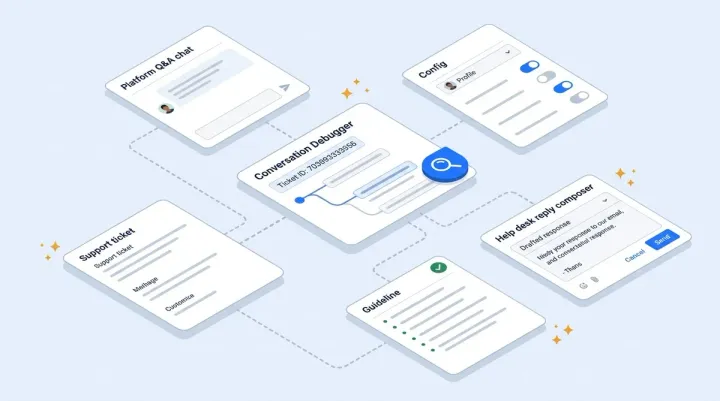
Whether you run a Shopify storefront or a custom ecommerce store, Alhena integrates with Shopify, WooCommerce, and Magento on the commerce side, plus helpdesks like Zendesk, Gorgias, Freshdesk, and Intercom. The platform can be configured and deployed in under 48 hours without any dev resources. OLIPOP's experience with Gorgias integration shows the potential: the brand achieved an 88% decrease in first response time, transforming CX and a 1,200% increase in revenue driven from customer service.
Getting Started: A Practical Roadmap for F&B Brands
Rolling out AI for your food and beverage ecommerce site and brand doesn't require a massive technology overhaul. Here's a practical path to launch and streamline your operations.
Start with Your Highest-Volume Tickets
For most DTC food brands, retailers, and ecommerce businesses, that's WISMO inquiries and subscription management changes. Automation of these two categories often account for 40 to 60% of total support volume. Automating these repetitive tasks first gives you the fastest ROI: fewer tickets reaching a human agent, faster response time, and happier customers who value the convenience. A human-handled ticket costs $5 to $12 per interaction. An AI-resolved ticket costs $1 to $2.
Connect Your Product Catalog for Accurate Answers
Feed your AI agent your complete product data: ingredients, allergens, nutritional information, sourcing details, and certifications. This is non-negotiable for food and beverage. Your AI must be grounded in verified data, not general knowledge. Alhena's approach uses only your own company's source of truth, which means the AI won't guess about whether your chocolate contains soy lecithin.
Layer in Retention Workflows
Once order management is automated, add AI-driven retention touchpoints. Set up proactive reorder reminders based on purchase frequency. Enable subscription flexibility through chat (pause, skip, swap). Use purchase history to power personalized cross-sell and upselling recommendations. Graza, the olive oil brand, pairs subscription milestone rewards (a branded tote at three months, an olive wood spoon at six months) with their DTC model. AI can automate the delivery of these retention moments.
Measure What Matters
Track the metrics that connect AI to business outcomes: ticket deflection rate, average resolution time, subscription churn rate, repeat purchase rate, and AI-attributed revenue. Use your ROI calculator to model the financial impact before you start, then compare actual results at 30, 60, and 90 days.
Key Takeaways
- Food and beverage ecommerce is booming ($327.7 billion in US online grocery spending in 2025) but carries a 64% annual churn rate that makes retention the top priority.
- DTC food brands face unique order management challenges: perishable delivery urgency, allergen accuracy requirements, and subscription fatigue that peaks at month six.
- AI automates 40 to 60% of support tickets (primarily WISMO and subscription changes), saving $30,000 to $60,000 monthly for brands handling 10,000 tickets.
- AI-powered retention tools like predictive churn scoring, personalized recommendations (40% higher conversion), and smart reorder reminders turn one-time buyers into long-term subscribers.
- Alhena AI combines a Product Expert Agent and Order Management Agent purpose-built for ecommerce, with hallucination-free responses, agentic checkout, and revenue attribution analytics.
Ready to see how AI can reduce churn and automate order management for your food and beverage brand? Book a demo with Alhena AI or start a free trial with 25 conversations to experience it firsthand.
Frequently Asked Questions
How does AI handle order management for perishable food deliveries?
AI connects to shipping and logistics systems to provide real-time order tracking, proactive delivery delay alerts, and automated replacement workflows for spoiled or damaged items. For perishable goods, the AI can prioritize urgent tickets and trigger cold-chain incident logging automatically. Brands like HelloFresh have automated 30% of chat interactions using AI, cutting response times by 76%.
What is the average churn rate for food and beverage subscription brands?
Food and beverage brands see a 64% annual churn rate overall, with monthly churn ranging from 6-8% for coffee and beverage subscriptions to 10-15% for curation-style boxes. The median F&B brand loses customers by month six. Top performers use AI-powered retention tools to extend customer lifetime value beyond 12 months.
Can AI accurately answer allergen and dietary questions about food products?
Yes, but only when the AI is grounded in verified product data rather than general training knowledge. Hallucination-free AI agents like Alhena pull ingredient and allergen information directly from your product catalog, ensuring accurate responses about gluten, nuts, dairy, and other allergens. General-purpose chatbots can confidently give wrong answers about ingredients, which poses a real health risk.
How much can a DTC food brand save by automating customer support with AI?
A brand handling 10,000 support tickets per month can save $30,000 to $60,000 monthly by shifting 60% of tickets to AI. Human-handled tickets cost $5 to $12 each, while AI-resolved tickets cost $1 to $2. Beyond cost savings, AI-driven customer service has helped brands like OLIPOP achieve a 1,200% increase in revenue from support interactions.
How does AI reduce subscription churn for food and beverage brands?
AI reduces churn through three mechanisms: predictive churn scoring that flags at-risk subscribers before they cancel, self-service subscription flexibility (pause, skip, swap) via chat, and personalized reorder reminders based on purchase history. Adding skip and pause options alone reduces voluntary churn by 18% in 45 days.
What ecommerce platforms does Alhena AI integrate with for food brands?
Alhena integrates with Shopify, WooCommerce, and Magento as your commerce platform, plus helpdesks like Zendesk, Gorgias, Freshdesk, and Intercom. Deployment takes under 48 hours with no developer resources needed. The platform connects your product catalog, order system, and support tools into a unified AI experience.
How does AI improve product recommendations for food and beverage ecommerce?
AI-driven recommendations produce 40% higher conversion rates and 35% larger basket sizes in grocery ecommerce. The AI tracks dietary preferences, taste profiles, purchase frequency, and seasonal patterns to suggest relevant products at the right time. Over 70% of online grocery shoppers already specify dietary preferences, showing strong consumer demand for personalized recommendations.
Is AI for food and beverage ecommerce worth the investment for small DTC brands?
Yes. Most AI platforms like Alhena offer free trial conversations and deploy in under 48 hours, making the barrier to entry low. Even small brands benefit from automating high-volume tickets like WISMO inquiries and subscription changes, which typically account for 40-60% of support volume. The ROI becomes clear within 30 to 60 days through reduced support costs and improved retention rates.