DTC brands spend between $2.70 and $5.60 per support ticket, according to Gartner. For a growing brand managing 5,000 customer support tickets a month, that's $28,000 or more burned on service operations alone. Adding another agent at $65,000 a year barely keeps pace. Your ticket volume grows 3x, but your budget doesn't.
Using AI for customer service gives DTC brands a way to automate the repetitive, scale customer support capacity, and improve the customer experience without adding headcount. This guide breaks down how to scale your customer service operation with AI, reduce response time, and solve the support team bottleneck for good.
Why DTC Brands Hit a Support Ceiling
A lean customer support team of three to five agents handles every interaction: order status inquiries, returns, product questions, sizing help, and subscription changes. When volume increases, the support queue grows faster than you can hire, and your support team can't scale to match. Scalable customer support isn't optional when your business grows this fast.
According to Shopify, 58.3% of online shoppers never receive a response to their inquiries. Only 23.4% are satisfied with the responses they get. That gap is where the customer experience breaks down and revenue leaks. Acquiring new customers costs 5 to 25x more than retaining existing ones, and repeat buyers spend 67% more than first-time customers. Without self service options and automation to handle the workload, your support team absorbs every ticket manually.
The cost of new headcount solves the problem temporarily. Each new team member takes four to six weeks of onboarding to ramp, turnover sits above 30% annually, and every hire needs tools, training, onboarding setup, and management bandwidth. Keeping response time flat as your business grows is unsustainable. What you need is automation that resolves issues consistently, without delays. The real question isn't whether to use AI for customer service. It's how fast you can implement it to scale.
Using AI for Customer Service in 2026
Modern AI customer service runs on generative AI and large language models, powered by machine learning and natural language processing. These AI agents read order data from Shopify, pull tracking numbers from carriers, process returns through your helpdesk, and answer product questions using your knowledge base and FAQ content, all without a human agent touching the support ticket.
Today's AI agents are agentic. They take actions, not just provide answers. They can modify subscriptions, initiate refunds, populate shopping carts, and escalate to a human agent when the conversation requires empathy or judgment. They also escalate based on customer sentiment, ticket priority, and workflow triggers you define. Smart escalation rules keep complex cases with your support team while AI handles the rest at scale. An effective conversational AI customer service solution covers every channel (live chat, email, Instagram DMs, WhatsApp, voice), maintains context across all customer support interactions, and gives your support team the ability to scale service operations across the entire operation. This level of automation is what turns a reactive support team into a scalable customer support engine.
Five Ways to Scale DTC Customer Support With AI
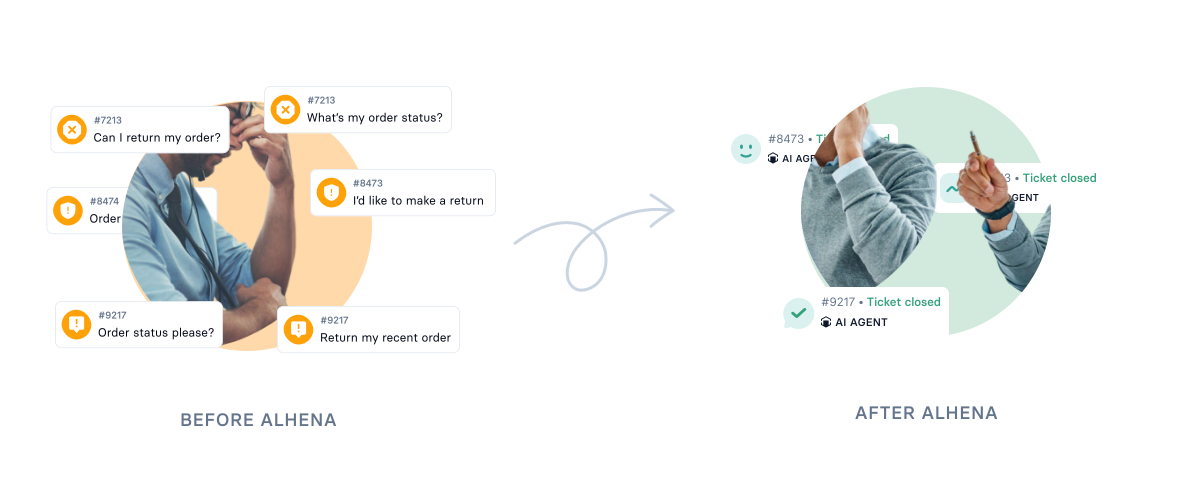
Automating high-volume support tickets at scale. "Where is my order?" accounts for up to 40% of all DTC support tickets. AI resolves these instantly by pulling real-time tracking data from your knowledge base. DTC shoe brand Clove automated 70% of its total monthly volume within three months, cutting response time from over one day to three minutes. That kind of efficiency and automation is how you scale customer support without scaling your support team.
Handling returns autonomously. AI agents verify the order, confirm the return window, generate a shipping label, and initiate the refund within the same conversation. Brands see a 58% resolution rate on chatbot-handled returns without human intervention, boosting customer satisfaction scores. Self service returns reduce workload on your support team and improve response time across the board.
Answering product questions from your knowledge base. Unlike a scripted FAQ bot, AI customer service agents pull personalized answers from your live product catalog, knowledge base, and frequently asked questions. Customers frequently ask questions about sizing, shipping, and returns, and AI handles all of them. This drives conversions and addresses each customer need with accuracy. AI can resolve issues ranging from sizing questions to subscription changes without escalation, solving problems your support team used to handle manually. When ticket volume increases, AI absorbs every increase without slowing down.
Providing 24/7 self service. Most support teams work 9-to-5, but AI-powered self service fills the gap around the clock and lets you scale coverage without extra shifts. 35% of abandoned carts are recovered through AI chat, and many of those recovery conversations happen outside business hours. This also reduces pressure on your support team during peak periods.
Freeing human agents for revenue. When AI handles routine customer support queries, your agents focus on high-value work: VIP customers, complex complaints, complex escalations, and pre-purchase consultations. Good Eggs reduced average handle time by 40% and saved 800 agent hours. These AI tools also use sentiment analysis to flag at-risk accounts and reduce churn before it happens, giving your customer success team a head start on onboarding issues, workload management, and workflow optimization. Your team members can track volume metrics, collect customer feedback, and monitor customer success KPIs instead of answering the same questions repeatedly. The efficiency gains let you expand your customer support coverage without expanding your team.
The ROI Math: AI vs. Hiring
Hiring one additional agent costs $65,000 to $80,000 per year, takes 4 to 6 weeks of onboarding to ramp, and covers 8 hours a day, 5 days a week.
Deploying AI customer service costs a fraction of one agent's salary, ramps in under 48 hours, and runs 24/7/365 across every channel. You can implement automation without developer resources and track every metric and KPIs through built-in analytics. Customer satisfaction scores, CSAT, response time, churn, and customer success metrics are all visible from one dashboard. No onboarding delays, no volume spikes you can't handle.
Clove achieved a 3x return on investment and 25% reduction in CX costs. Customer satisfaction scores rise while costs drop. Brands regularly see 2 to 5x ROI in the first year, with measurable gains in efficiency, CSAT, and performance across key metrics. When you use AI to manage workflows and resolve issues at scale, you expand customer support capacity and scale your support team's impact without adding headcount.
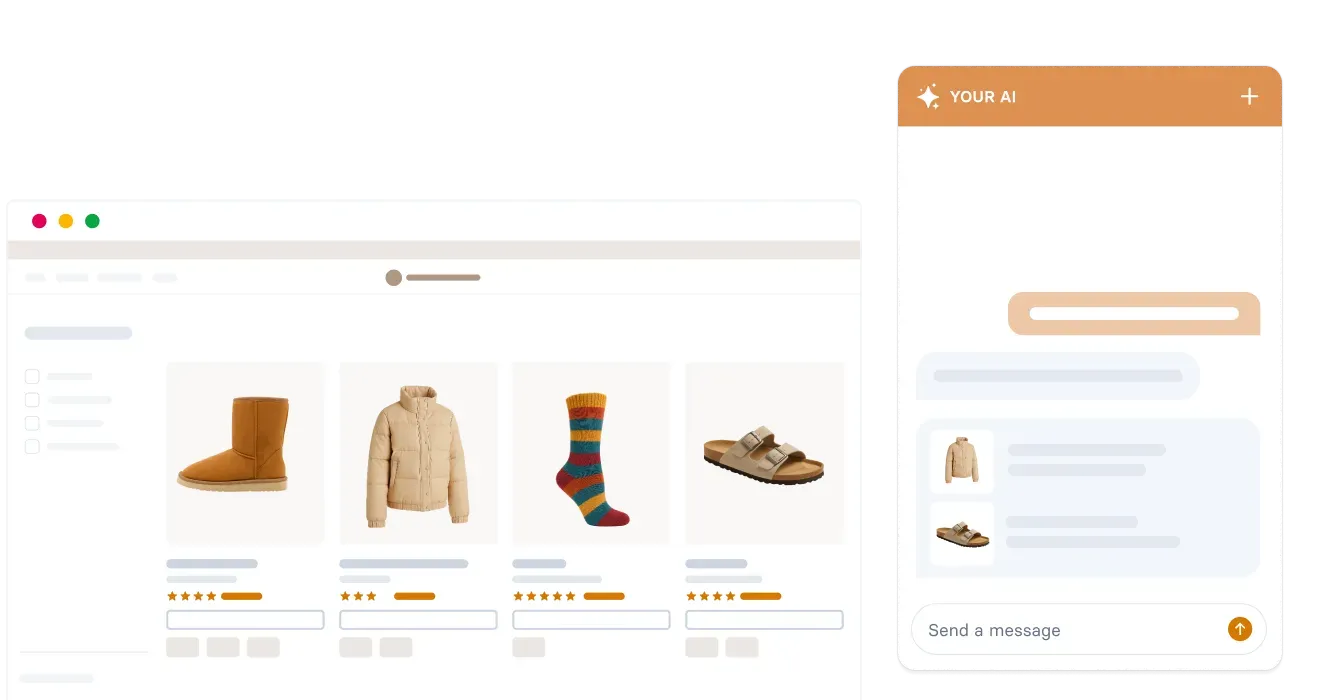
How AI-Powered Customer Service Tools From Alhena Support DTC Brands
Alhena AI is purpose-built for ecommerce. Alhena combines artificial intelligence-driven solutions with sales intelligence to transform the customer experience, turning every customer service interaction into a potential conversion.
Powered by generative ai and machine learning, Alhena grounds every response in verified product data, tailored to each customer, order history, and your knowledge base. For DTC brands where trust and customer satisfaction are everything, this accuracy is non-negotiable.
Alhena deploys a Product Expert Agent for pre-sale questions and guided selling, and an Order Management Agent for post-purchase inquiries like tracking, returns, and subscription changes. Unlike support-only tools, Alhena's AI Shopping Assistant populates carts and nudges conversions with personalized product recommendations. Tatcha saw a 3x conversion rate and 11.4% of total site revenue attributed to Alhena's AI.
Alhena covers web chat, email, Instagram DMs, WhatsApp, and voice from a single platform, maintaining full conversation history across all interactions and channels. No developer resources needed, Alhena connects to Shopify, WooCommerce, Magento, and helpdesks like Zendesk, Freshdesk, Gorgias, and Kustomer. Puffy achieved 63% automated inquiry resolution and 90% CSAT.
Getting Started
Start by automating your top three ticket types, usually order tracking, return status, and basic product questions that represent your most common customer needs. Then expand to AI-powered product recommendations, predictive analytics, and guided selling. Using ai for this purpose is transformative, this is where ai customer service powered by real-time personalization stops being a cost center and becomes a revenue driver. Review customer interactions, optimize automated workflows, and treat these ai tools as a team member that improves every week through machine learning. Track your impact with built-in analytics.
Key Takeaways
- DTC brands cannot hire their way out of support growth. Ticket volume scales faster than headcount budgets allow. You need to automate.
- AI customer service in 2026 is agentic. Modern generative ai and conversational ai agents take actions, processing returns, modifying orders, populating carts, not just answering questions.
- The ROI is proven. Brands like Clove (70% automation, 3x ROI), Tatcha (3x conversion, 11.4% of site revenue), and Puffy (63% resolution, 90% CSAT) demonstrate measurable results.
- Choose a platform built for e-commerce, not retrofitted. Alhena AI combines support automation with sales intelligence.
Ready to scale your DTC support without adding headcount? Book a demo with Alhena AI or start for free with 25 conversations.

Frequently Asked Questions
What is AI customer service for DTC brands?
AI customer service uses large language models and ecommerce integrations to automate support tasks like order tracking, returns, product questions, and subscription management. For DTC brands, it means handling thousands of concurrent conversations 24/7 without hiring additional agents. For a broader look at the market, see our guide to the best Ada alternatives for e-commerce.
How much can AI reduce customer service costs for DTC brands?
DTC brands typically see 20-30% cost reductions in CX operations. Clove, a DTC shoe brand, achieved 25% cost savings and 3x ROI within three months of deploying AI. AI-powered support deflects 25-45% of tickets on average, directly reducing cost per resolution.
Can AI handle complex customer inquiries or only simple FAQs?
Modern AI customer service agents go far beyond FAQs. They process returns, modify subscriptions, initiate refunds, check inventory, and provide personalized product recommendations using real catalog data. Complex or emotionally sensitive issues are automatically escalated to human agents.
How long does it take to deploy AI customer service?
Platforms like Alhena AI deploy in under 48 hours with no developer resources needed. They connect directly to Shopify, WooCommerce, Magento, and helpdesks like Zendesk, Freshdesk, and Gorgias. Most brands start seeing measurable results within 30 days.
Will AI customer service hurt my brand voice?
No. Leading AI platforms let you fully customize tone, style, and communication guidelines. Alhena AI grounds every response in your verified product data and brand knowledge base, so responses sound on-brand and accurate — not generic or robotic.
What support channels does AI customer service cover?
Omnichannel AI platforms cover web chat, email, Instagram DMs, WhatsApp, and voice from a single interface. Conversation context carries across channels, so customers never repeat themselves whether they start on social media and follow up via email.
How does AI customer service compare to hiring another support agent?
A single support agent costs $65,000-$80,000 per year, takes 4-6 weeks to ramp, works 8 hours a day, and faces 30%+ annual turnover. AI handles thousands of concurrent conversations 24/7/365 at a fraction of the cost with zero turnover and under 48-hour deployment.
Does AI customer service drive revenue or just deflect tickets?
The best AI platforms drive measurable revenue. Alhena AI's Shopping Assistant populates carts, recommends products, and pre-fills checkout. Tatcha saw 3x conversion rates and 11.4% of total site revenue attributed to AI. Victoria Beckham reported a 20% AOV increase.