If you’ve recently searched “Why is my e-commerce chatbot not reducing support costs?” or wondered, “How do I actually measure if my bot is working?” you’re not alone. Many brands deploy AI chatbots expecting 60–80% savings, yet see only 20–30% cost reduction on average.
The AI containment rate, the percentage of customer interactions resolved end-to-end by a bot without a human agent, is the #1 KPI for ROI. Companies achieving 70%+ containment save millions and improve conversions; those below 40% face negative ROI and poor customer experience.
At Alhena AI, we take a nuanced approach, focusing on the deflection rate as our primary metric. Why? Because deflection reflects not only how many queries the AI resolves but also how many potential escalations to agents were successfully deflected across every service channel without harming satisfaction. This guide clarifies containment vs deflection, shares benchmarks, and explains how Alhena AI’s methodology boosts effectiveness, efficiency, and CX.
What is AI containment rate?
AI containment rate measures how effectively an e-commerce chatbot resolves customer inquiries without human intervention. It's the percentage of conversations fully "contained" by the bot from initial question to final solution without escalating to a live agent.
The calculation formula is
Containment Rate = (Total Resolved Queries by Chatbot ÷ Total Queries Handled by AI Chatbot) × 100.
Example: If your bot handles 1,000 conversations and resolves 750, containment is 75%. A higher rate correlates with lower average cost, faster response time, and improved customer satisfaction score, making it a core measurement of ROI.
What is Deflection rate?
Deflection rate measures the share of support requests handled entirely by self-service tools like chatbots or knowledge bases that never reach a human agent. In e-commerce, it reflects how many issues your AI deflects from the team by delivering a satisfactory automated resolution.
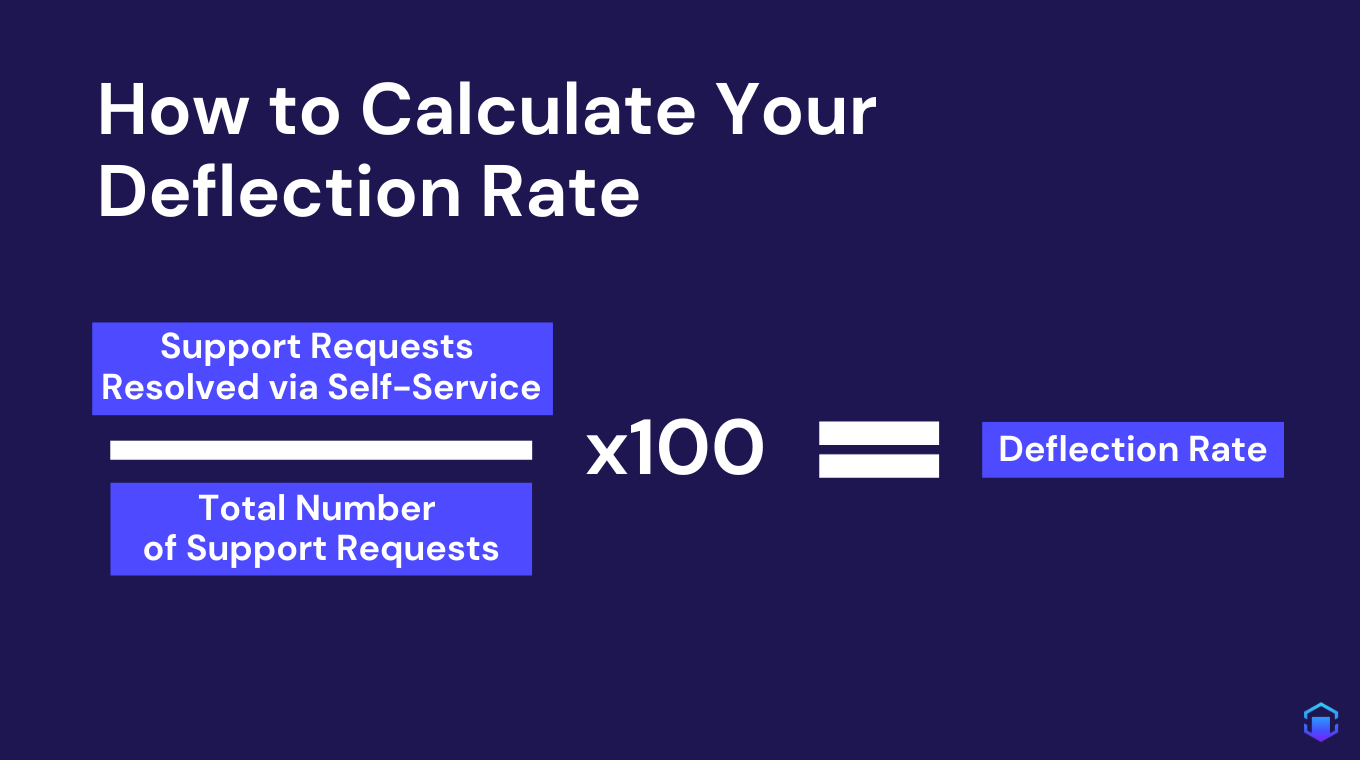
Example: If your chatbot resolves 900 of 1,100 requests, deflection is 81.8%. High deflection reduces workload on agents, cuts costs, and gives customers instant answers vital for scaling service quality across every channel.
Containment Rate vs. Deflection Rate: What's the Difference?
Leaders often ask if they’re the same:
- Containment Rate = How many conversations were fully resolved by the bot.
- Deflection Rate = How many potential agent escalations were avoided because the bot provided a satisfactory answer.
The distinction is crucial. A bot may technically "contain" a conversation by providing any response that keeps customers from escalating, but that doesn't mean the customer received actual help. Bad containment occurs when bots give vague, unhelpful answers that technically close the conversation but leave customers frustrated.
At Alhena AI, we prioritize deflection as a quality-first metric. True deflection means customers got complete, accurate resolutions and genuinely didn't need human assistance not just that they gave up trying to reach an agent.
Industry Benchmarks
Understanding performance tiers helps gauge your chatbot's effectiveness:
- Beginner bots: 20–40% (basic rule-based systems)
- Intermediate bots: 40–70% (solid FAQs + flows)
- Advanced bots: 70–90% (AI-powered NLP + integrations)
By sector (benchmark ranges vary):
- E-commerce: 70–80% typical; leaders 89–92%
- SaaS/Technology: 55–75% (depends on product complexity)
- Telecom: 65–85%
- Banking: 50–70%
Alhena AI clients routinely achieve 80–90% deflection in e-commerce verticals. Read Alhena customer stories on how deflection rate improved.
Why Deflection (Containment) Rate Matters for E-commerce Leaders
Immediate Cost Impact: Every automated resolution saves $5–$15 compared to human agent interactions. Optimizing deflection can reduce support costs by up to 30% (often more in retail and fintech), improving operational efficiency fast.
Customer Experience at Scale: Modern shoppers expect instant answers for order tracking, returns, and product questions. High-deflection chatbots provide 24/7 availability while maintaining consistent response quality. However, deflection quality matters; customers prefer accurate automated help over fast but useless responses.
Operational Resilience During Peak Periods: Holiday sales, product launches, and viral marketing campaigns create massive support volume spikes. Strong deflection eliminates queues, trims overtime, and sustains service quality when demand surges.
Common Deflection Challenges: Why Chatbots Fail to Deliver
E-commerce leaders often wonder, "Why is my chatbot's deflection rate so low?" The most common causes include
- Outdated knowledge bases
- Weak NLP / intent recognition
- No backend integrations (CRM, OMS, shipping APIs)
- Overly rigid flows
- Poor fallback design
Traditional rule-based systems particularly struggle with query variations and unexpected phrasing, often responding with generic "I don't understand" messages that drive customers away.
How Alhena AI Achieves Superior Deflection
Semantic Understanding vs. Keyword Matching
Unlike rule-based chatbots that rely on exact keyword matches, Alhena AI employs semantic similarity engines that understand conversational intent. This approach recognizes synonyms, paraphrases, and context shifts, enabling the system to address nuanced questions that would confuse traditional bots.
Intelligent Fallback Safety Mechanisms
When confidence is low, Alhena AI's fallback safety systems dynamically refine searches or prompt clarifying questions rather than defaulting to unhelpful responses. Multiple vector retrieval algorithms work together to select the most accurate information from knowledge bases, enabling resolution of complex, multi-step customer requests without human handoff.
Real-Time System Integration
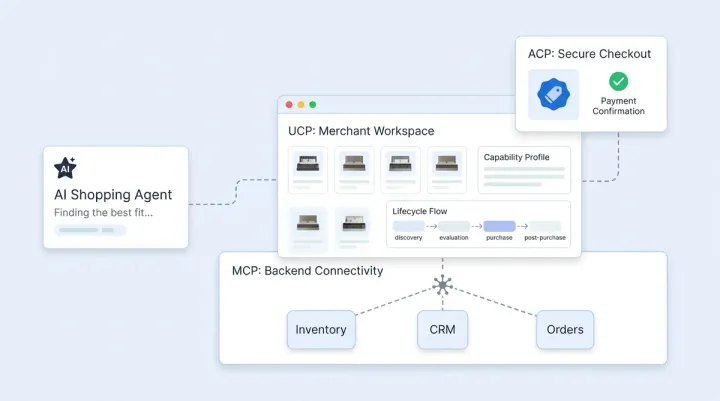
Deflection isn’t just about answering questions; it’s about completing actions. Alhena AI’s custom task agents connect directly to your backend systems (order management, payment gateways, inventory databases). This allows the bot to execute operations such as checking shipment status, updating payment details, or initiating returns, transforming simple Q&A into end-to-end self-service.
Strategies to Improve Deflection While Safeguarding Experience
- Expand and optimize self-service content. Publish fresh FAQs, how-tos, and use-case guides.
- Enhance content quality. Use screenshots, steps, and short videos to troubleshoot.
- Streamline access. Organize by tags/categories; let conversational AI surface relevant content across each service channel.
- Enable action-oriented automation. Embed order tracking, address updates, returns, and payment changes.
- Promote self-service adoption. Offer guided buttons and suggestions once your flows are robust.
Measuring Success Beyond Simple Deflection Metrics
While deflection rate provides valuable insights, comprehensive measurement requires additional metrics:
- Resolution Quality: Track whether deflected customers return with the same issue.
- Customer Satisfaction: Measure satisfaction specifically for automated interactions
- Agent Efficiency: Monitor how deflection affects remaining human-handled cases.
- Revenue Impact: Assess whether high deflection correlates with conversion improvements
At Alhena AI, we emphasize "good deflection" scenarios where customers receive complete, accurate resolutions and genuinely don't need further assistance. This approach ensures deflection improvements translate to genuine business value rather than just reduced ticket volumes.
Conclusion
In e-commerce, AI containment rate remains a critical KPI, but the smartest operators focus on deflection quality over quantity. At Alhena AI, we measure success not by how many customers we prevent from reaching agents, but by how many receive complete, satisfactory resolutions through automation.
By emphasizing semantic understanding, real-time integrations, and accuracy-first automation, Alhena AI helps brands achieve deflection that truly counts, driving cost savings, customer loyalty, and sustainable scalability. Because the best deflection isn't about keeping customers away from human agents; it's about solving their problems so well that human help becomes unnecessary. Ready to transform?
Schedule a Demo | Try for Free
FAQs
What is a good AI containment rate for an e-commerce chatbot?
A strong containment rate for modern e-commerce chatbots falls between 70 and 90 percent, depending on complexity. Anything below 40 percent usually indicates weak NLP, outdated knowledge bases, or missing backend integrations. Brands using platforms like Alhena AI typically see 80-90 percent effective deflection because the AI resolves queries end-to-end instead of just closing conversations.
How do I calculate AI deflection rate for my support team?
Deflection rate is calculated as,
Deflection Rate = Resolved Requests by AI ÷ Total Incoming Requests × 100
If your AI resolves 900 out of 1,100 requests, deflection is 81.8 percent. It reflects how many cases never needed human handling because the AI delivered a complete, accurate answer.
Can high containment mean low customer satisfaction?
Yes. Bad containment = unresolved or vague answers. Alhena AI solves this by focusing on good deflection.
How do seasonal peaks like BFCM affect deflection and containment rates?
Holiday peaks increase ticket volume and query complexity. Bots with weak NLP and rigid flows see sharp drops in performance. Alhena AI maintains high deflection by updating intents dynamically, enriching real-time knowledge, and using fallback safety nets that clarify rather than fail.
How can leaders improve deflection without adding customer friction?
Invest in context-aware NLP, updated KBs, and fallback safety nets. Always measure alongside CSAT.
What defines "good deflection" at Alhena AI?
When a customer gets a complete, accurate resolution instantly without escalation, it reduces workload for agents while improving customer experience.