Three Protocols, One High-Stakes Decision
Three competing protocols are emerging to define how intelligent agents discover, evaluate, and purchase products on behalf of shoppers with increasing autonomy. This level of agent autonomy changes everything. The Agentic Commerce Protocol, the Universal Commerce Protocol, and the Model Context Protocol each propose a different answer to the same question: how should AI-powered shopping and AI-powered commerce actually work?
For ecommerce businesses, the stakes are not abstract. Building infrastructure around the wrong standard burns engineering cycles and budget. Ignoring all three means missing the window entirely. AI agents that can complete tasks autonomously are already reshaping how consumers and shoppers buy. Shopping powered by agentic AI agents grew over 800% year over year through the 2025 holiday season, and the protocols governing that traffic are reshaping the digital commerce ecosystem right now.
This guide breaks down each protocol, compares their architectures, details what merchants need to support them, and lays out a practical strategy for businesses that want to be ready without betting everything on one outcome.
What Is the Agentic Commerce Protocol
The Agentic Commerce Protocol (ACP) is designed to let autonomous AI agents complete full shopping transactions autonomously. That means product discovery, comparison, and checkout all happening inside conversational AI-native interfaces, replacing traditional interaction models, not on a merchant's website.
The architecture is centralized. Merchants submit structured product feeds to the platform operating the protocol. When a consumer uses a conversational AI agent to find and buy a product, the agent searches those feeds, generates personalized recommendations for a personal shopping experience with personal shopping recommendations, evaluates options, surfaces product recommendations based on shopper preferences and personalization signals, and processes the purchase using single-use tokens. The shopper never leaves the AI interface. The entire shopping journey happens inside the AI platform.
ACP handles transaction execution through shared payment credentials that are time-bound and scoped to a single purchase. This keeps raw payment data away from the AI agent itself. Inventory synchronization happens through the merchant's feed updates, and return and refund flows route back through the payment processor's existing infrastructure.
The cost structure reflects the centralized model. Merchants pay both a platform fee (roughly 4%) and standard payment processing (approximately 2.9%), bringing total transaction costs to around 7% per sale. On $1 million in monthly volume, that adds up to about $70,000 in protocol-related fees alone.
What Is the Universal Commerce Protocol
The Universal Commerce Protocol (UCP) takes a broader and more decentralized approach. Where ACP focuses on checkout inside AI interfaces, UCP aims to create a shared standard for how AI agents interpret shopper intent, surface personalized recommendations, and complete tasks like browsing catalogs, checking inventory, and finishing checkout across any AI surface.
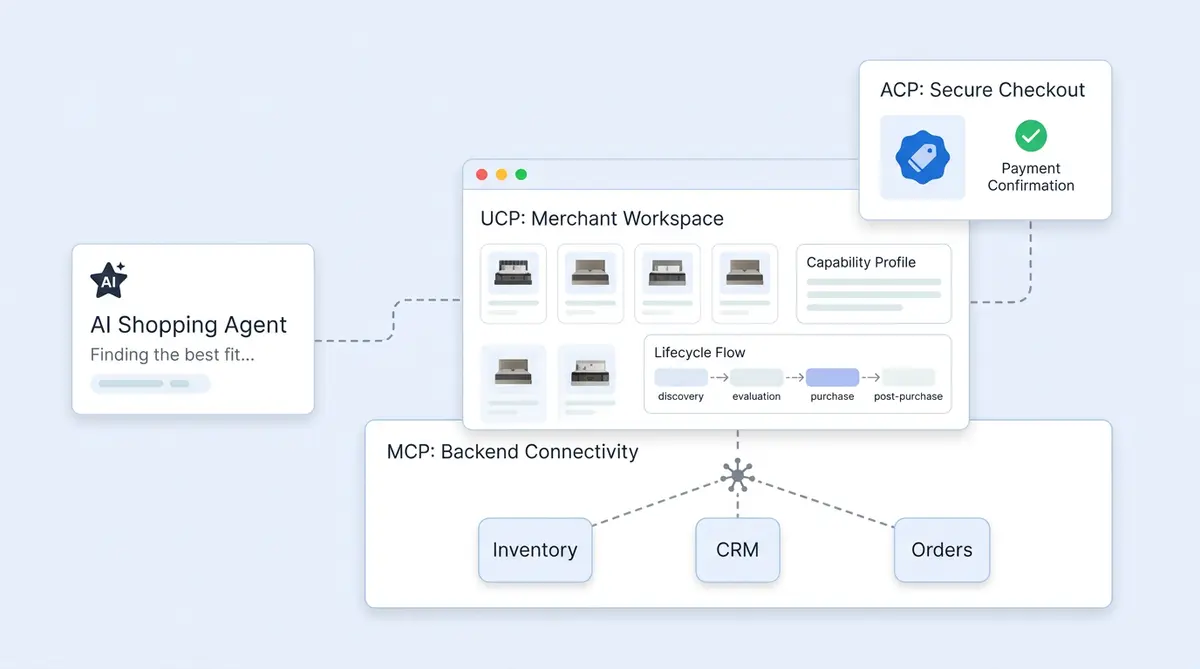
UCP covers the full commerce lifecycle: product discovery, catalog browsing, cart management, checkout, and post-purchase support including returns and order tracking, covering every step of the shopping journey. Merchants don't upload data to a central platform. Instead, they host a capability profile on their own domain (at a standardized endpoint), and AI agents discover these profiles, negotiate supported capabilities, and transact directly with the merchant's systems.
The protocol is backed by major commerce and search platforms. Its coalition includes large retailers, global payment networks, and the commerce platform that powers millions of online stores. The decentralized architecture means merchants retain more control over their product data, customer relationships, loyalty program integrations, and how their interaction models work with AI.
Transaction costs are lower because there is no platform fee layer. Merchants pay only their standard payment processing rates, saving roughly $40,000 per month compared to ACP on the same $1 million in volume. Merchant authentication happens through the capability profile endpoint, and inventory synchronization is real-time because the agent queries the merchant's own systems rather than a cached feed.
What Is the Model Context Protocol
The Model Context Protocol (MCP) operates at a fundamentally different layer. It is the developer-focused standard for how AI models connect to external AI tools, commerce APIs, and data sources. These AI tools enable, serving as the foundational plumbing that commerce-specific protocols build on top of.
MCP is not commerce-specific. It defines how any AI agent accesses any external system, whether that is an inventory database, a CRM. Both consumers and the businesses serving them benefit from this connectivity, a shipping provider, or an order management platform. Think of it as the universal adapter layer, the protocol that connects everything from simple chatbots and basic customer service chatbots to sophisticated autonomous shopping agents. In commerce contexts, both ACP and UCP rely on MCP-style connections to pull product data, check stock levels, and execute operations against merchant backends.
The protocol has been donated to an open foundation and now has broad industry backing. Monthly SDK downloads exceed 97 million, and every major AI platform supports it as the backbone of intelligent agents across digital commerce. Because MCP is the connectivity layer rather than a commerce workflow layer, it does not directly handle product data ingestion, transaction execution, or return flows. Those responsibilities belong to the commerce protocols built on top of it.
For ecommerce engineering teams, MCP matters because it determines how your systems expose data to AI agents at the infrastructure level, allowing them to understand buyer intent. If your product catalog, order history, and inventory APIs are MCP-compatible, you have a foundation that works regardless of which commerce protocol gains dominance above it.
Architectural Differences: Where They Overlap and Diverge
Product data ingestion is where the protocols diverge most sharply. ACP requires merchants to submit structured feeds to a central platform that indexes and serves them. UCP lets merchants host their own data and expose it through standardized endpoints. MCP provides the connection layer but leaves data format and hosting decisions to the protocols above it.
Merchant authentication follows a similar split. ACP authenticates merchants during the feed submission and onboarding process. UCP authenticates through the capability profile hosted on the merchant's domain, giving brands more control. MCP handles tool-level authentication between AI agents and external systems.
Transaction execution is ACP's core strength, with built-in payment token infrastructure designed for AI-native checkout. UCP supports checkout but routes transactions through existing payment processors rather than adding a platform-level payment layer. MCP does not handle transactions directly.
Inventory synchronization differs by architecture. ACP relies on periodic feed updates, which can introduce latency. UCP queries merchant systems in real time. MCP enables the real-time connections that UCP depends on.
Return and refund flows are handled by ACP through its payment processor integration and by UCP through its post-purchase lifecycle support. MCP can connect to return management systems but does not define a return workflow itself.
The overlap is significant at the data layer: all three protocols ultimately need clean, structured, and complete product data from the merchant. The divergence is in who controls that data, where it lives, and how transactions flow through the system.
Merchant Requirements and Integration Demands
Supporting each protocol requires different technical work, and some of those requirements conflict or create redundant effort for commerce teams with limited engineering bandwidth.
For ACP: Merchants need to prepare and maintain structured product feeds in the platform's required format. This includes product attributes, pricing, availability, images, and variant data. You also need to integrate with the platform's payment token system and set up webhook handlers for order notifications. Feed formatting and submission workflows are specific to ACP and do not transfer to other protocols.
For UCP: Merchants need to create and host a capability profile at a well-known endpoint on their domain. This requires exposing API endpoints for catalog queries, cart operations, checkout, and post-purchase actions. The data standards align more closely with existing ecommerce platform APIs, especially for brands already on major commerce platforms where native support is rolling out.
For MCP: The requirement is more foundational. Merchants (or their platform providers) need to expose inventory, catalog, and order data through MCP-compatible server implementations. This is infrastructure-level work that benefits all commerce protocols but requires engineering resources to set up properly.
The redundancy problem is real. A brand supporting all three protocols may need to maintain separate product feeds (for ACP), capability profiles (for UCP), and MCP server implementations simultaneously. For mid-market businesses without dedicated protocol engineering teams, this creates a resource allocation problem that has no easy answer today.
Current Adoption and Industry Momentum
ACP has early traction with consumer-facing AI shopping surfaces. Major marketplaces, delivery platforms, and digital commerce ecosystems and enterprise marketplaces have signed on, and over a million merchant storefronts are expected to come online through commerce platform partnerships. The protocol benefits from direct integration with the AI interface where shoppers are already browsing, including ChatGPT and similar AI assistants.
UCP has broader coalition support from the retail and payments industry. Its backers include some of the largest retailers in the world, multiple global payment networks, and the commerce platform powering a significant share of online stores. The decentralized architecture appeals to enterprise merchants who want to retain control over their data and customer relationships.
MCP has the widest adoption at the infrastructure level, with near-universal support across AI platforms and developer tools. Its 97 million monthly SDK downloads make it the de facto standard for AI-to-system connectivity, even if it does not prescribe commerce workflows.
Industry momentum is split. Some analysts see convergence ahead, with ACP and UCP eventually interoperating on top of MCP. Others expect a period of fragmentation where merchants must support multiple protocols or risk being invisible on certain AI surfaces.
Critical industry analysis has questioned whether these protocols solve real merchant problems or primarily serve the interests of the AI platforms promoting them. The concern is that centralized protocols extract value from merchants (through fees and data control) while decentralized protocols shift integration costs onto merchants without providing sufficient tooling. Both critiques have merit, and ecommerce business leaders should weigh protocol adoption against their own margin structures and engineering capacity.
What Ecommerce Brands Should Actually Do Right Now
The strategic question is whether to invest in one protocol, hedge across all three, or focus on foundational product data quality that will be required regardless of which protocol wins.
The answer, for most brands, is the third option first.
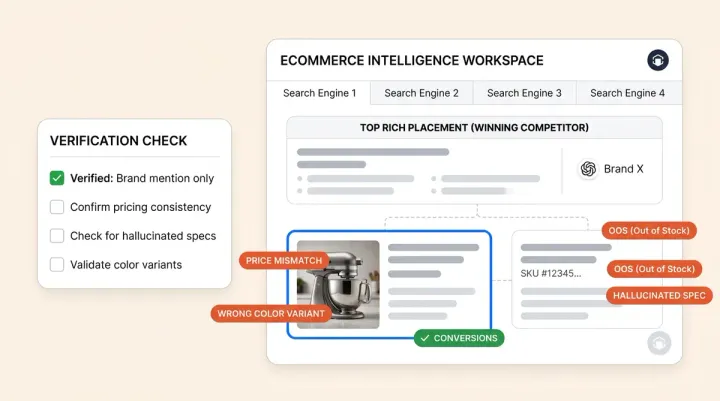
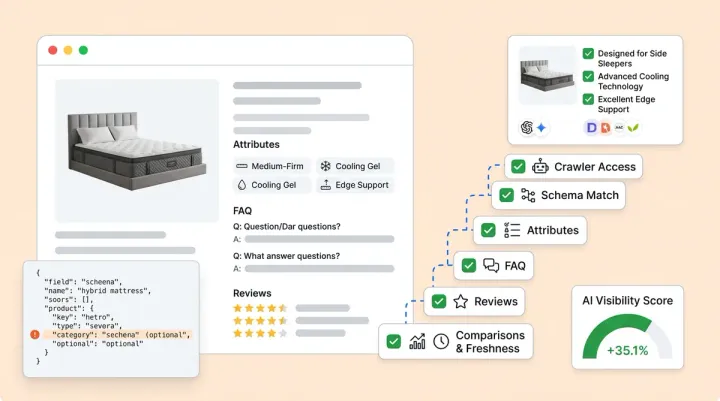
Every protocol depends on the same foundation: complete, accurate, and richly structured product data. If your product attributes are missing key fields, your inventory data lags behind reality, or your catalog lacks the metadata that AI agents need to make purchasing decisions, no protocol will make your products discoverable to AI-powered shoppers. Products that are not discoverable on AI powered platforms simply do not exist in the agentic commerce landscape. Fix the data layer before worrying about protocol choice.
Once your data foundation is solid, the smart move is incremental adoption. If your commerce platform offers native support for one protocol, activate it. If a second protocol gives you access to a high-traffic AI surface like ChatGPT or Google Gemini, add it. Don't try to build custom integrations for all three simultaneously unless you have the engineering team to support that.
Monitor where your agentic traffic is actually coming from. Track which protocols improve customer loyalty and personalization outcomes and repeat purchase rates. The protocols that drive measurable revenue for your specific catalog and audience are the ones worth deeper investment. Everything else is optionality, not priority.
How Alhena AI Helps Brands Navigate Protocol Fragmentation
Alhena AI helps brands navigate this fragmentation by working at the foundational layer that all three protocols depend on. Rather than tying your strategy to a single protocol outcome, Alhena ensures your product data, structured markup, and AI visibility are optimized at the level every protocol requires.
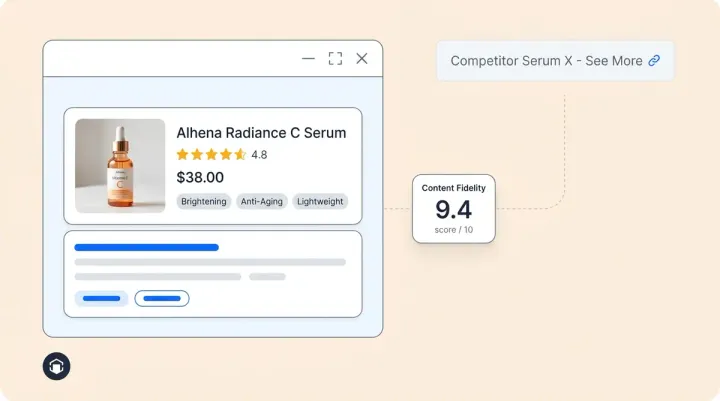
On your own site, Alhena's Product Expert Agent acts as the AI shopping layer you control entirely, guiding visitors to the right products, populating carts, and pre-filling checkout with zero hallucinations. Brands like Tatcha have seen 3x conversion rates and 38% higher average order values after deploying it.
Across external AI surfaces, Alhena’s AI assistant provides intelligence on how each protocol impacts your product discoverability and conversion. You can see which AI agents are finding your products, which protocols are driving traffic, and where gaps exist in your agentic commerce readiness. That visibility lets you make protocol investment decisions based on actual performance data, not speculation about which standard will win.
The result is a protocol-agnostic position. Your brand is ready for whichever standard gains dominance, and you are not locked into infrastructure that becomes obsolete if the landscape shifts. For a deeper look at the agentic commerce opportunity, see the Agentic Commerce Report for DTC Founders.
The Bottom Line
The protocol war is real, but the winners will not be the brands that pick the right protocol first. They will be the ones whose product data foundation is strong enough to plug into any protocol as the landscape settles.
Brands fixating on protocol choice while neglecting data quality are solving the wrong problem. The hierarchy is clear: get your product data right, build AI visibility at the foundational layer, and add protocol-specific integrations as they prove their value for your business.
The agentic commerce wave is still early (less than 0.2% of total ecommerce sessions today), but 800%+ year-over-year growth means the window for preparation is closing. The brands that invest in AI-ready infrastructure now will capture outsized revenue as this channel scales.
Ready to build your protocol-agnostic AI commerce foundation? Book a demo with Alhena AI or start for free with 25 conversations.
Frequently Asked Questions
How should ecommerce brands prepare for agentic commerce protocols without committing to one standard?
Focus on your product data foundation first, because every protocol requires complete, structured, and accurate catalog data. Alhena AI works at this foundational layer, ensuring your product attributes, structured markup, and AI visibility are optimized for all three protocols simultaneously. This protocol-agnostic approach means you are ready for whichever standard gains dominance without rebuilding infrastructure.
What is the difference between ACP and UCP for AI shopping transactions?
ACP uses a centralized model where merchants submit product feeds to a single platform, and AI agents complete checkout inside the AI interface with platform fees around 7% per transaction. UCP is decentralized, letting merchants host their own capability profiles and transact directly with AI agents at standard processing rates. Alhena AI provides visibility into how each protocol drives traffic and conversion so brands can allocate resources based on actual performance data.
Does my ecommerce store need to support all three agentic commerce protocols?
Not immediately. Start with whichever protocol your commerce platform supports natively, then add others incrementally as they prove revenue value. Alhena AI helps brands monitor which AI agents and protocols are driving product discovery and purchases, so you can prioritize protocol investments based on measurable results rather than speculation about which standard will win.
How does MCP relate to ACP and UCP in the agentic commerce stack?
MCP is the foundational connectivity layer that lets AI models access external tools and data sources. ACP and UCP are commerce-specific protocols built on top of MCP-style connections. Alhena AI works across all three layers, optimizing your product data at the MCP infrastructure level while providing intelligence on how commerce protocols like ACP and UCP impact your discoverability and conversion across AI shopping surfaces.
What product data quality standards do AI shopping agents require for agentic commerce?
AI agents need complete product attributes (sizing, materials, use cases), real-time inventory accuracy, rich variant data, and structured metadata that machines can parse. Incomplete or stale data makes your products invisible to agentic commerce protocols regardless of which standard you support. Alhena AI audits and optimizes your product data foundation to meet these requirements across all three protocols.