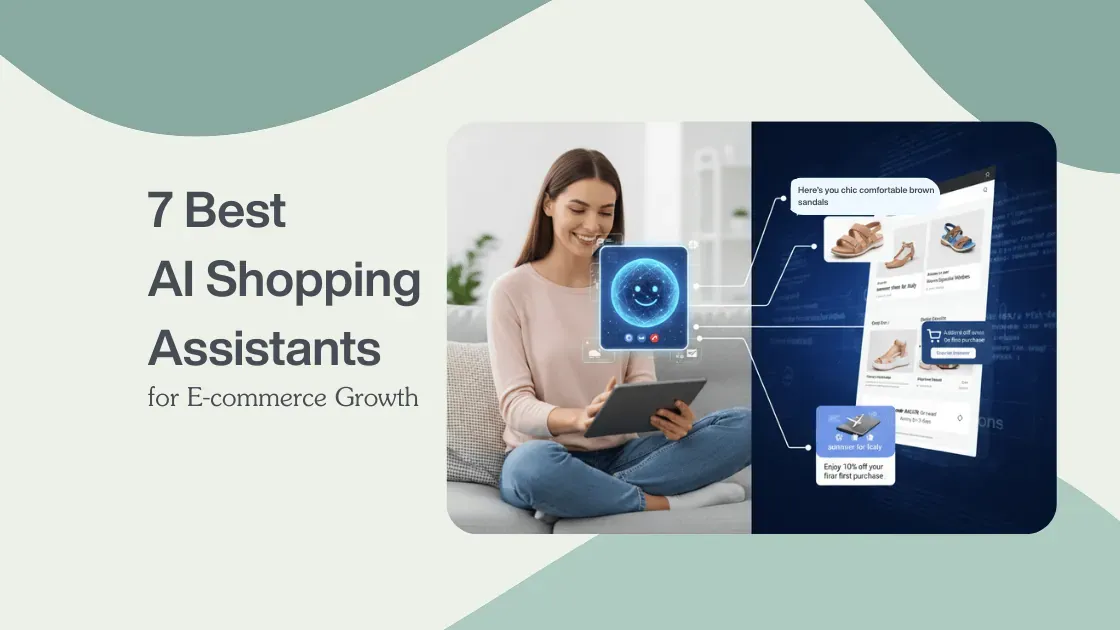
If you’re leading ecommerce, CX, or digital transformation today, you’ve probably felt the shift: shoppers now expect smarter guidance, faster answers, and zero friction from browsing to checkout. They don’t want generic bots. They want intelligent, personalized, conversational shopping help the kind that actually moves revenue.
That’s why AI shopping assistant have evolved from simple FAQ bots into agentic systems that can guide product discovery, drive conversions, and automate 70-90% of repetitive support. Done right, an AI assistant becomes a new profit center, not a cost line.
But with so many options in the market, which platform actually drives growth… and which ones just talk about it? This guide breaks it down. Below are the 7 best AI shopping assistants for e-commerce, each with strengths, ideal use cases, and when to choose what.
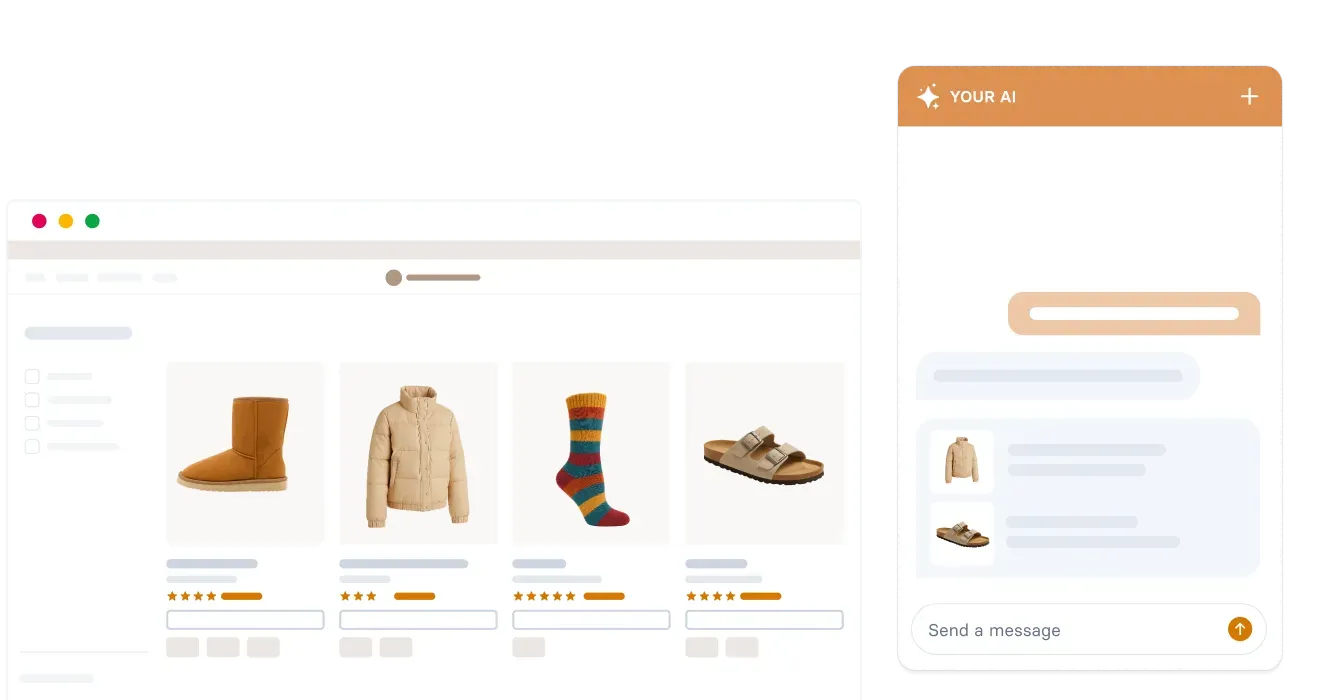
If you’re currently using tools like Zendesk, Zoho Desk, Kustomer, Gorgias, Intercom, Shopify, or custom helpdesks, this guide will help you find the right fit.
What is an AI Shopping Assistant?
Unlike early chatbots, today’s assistants are powered by advanced AI technology. They act as personal shoppers or shopper apps, helping customers track orders, check order status, and discover products with natural queries.
Key benefits include:
- Accurate product discovery with AI that can understand context.
- Consistent support across ecommerce websites, apps, and other messaging platforms.
- Personalized suggestions built on customer feedback and past behavior.
- Conversational and voice assistants that make search natural.
- Automation of service requests like returns and FAQs reduces support agent workloads.
- Targeted nudges that recover abandoned carts and maximize sales.
In short, modern AI assistants are no longer basic chatbots; they are full-growth engines reshaping ecommerce.
👉 If you’d like a deeper dive into how AI shopping assistants are transforming digital retail, you can click here to learn more
Customer Snapshot
| Tool | Integration | AI Type | Key Strengths | Best For |
|---|---|---|---|---|
| Alhena AI #1 Choice | ✅ Omnichannel, All help[desks and ecommerce stacks | Agentic / Generative | Pre-purchase to post-purchase, high accuracy and guided flows. All in one solution Shopping & Support | Ecommerce/ DTC brands seeking an all-in-one solution that drives conversions. |
| AskTimmy AI | 🔌 Conversational | Generative / Semantic | Combines chat + semantic search to simplify product details and recommendations. | Fashion & lifestyle ecommerce focused on discovery experiences. |
| Gorgias AI | 🔌 Helpdesk + Chat | Conversational AI | Conversational support with upsells and order tracking context. | Shopify & helpdesk teams wanting support + shopping guidance. |
| Rep AI | 🔌 Conversational | Sales-Focused AI | Predicts intent, provides personalized recommendations and cart strategies. | Brands focused on conversion optimization and tailored selling. |
| Zoovu | 🔌 Guided commerce | Conversational / Guided | Intelligent discovery questions with media-rich assistance. | Complex or high-consideration product categories. |
| Intercom AI | 🔌 Messenger + Chat | LLM Chat Assistant | Conversational UI with easy configurations and proactive engagement. | E-commerce teams balancing support + engagement. |
| Amazon’s Rufus | 🔌 Platform-Embedded | Generative Retail AI | On-site AI shopping assistant integrated directly into Amazon search. | Amazon marketplace shoppers & high-scale retail use cases. |
1. Alhena AI
Alhena AI is redefining ecommerce automation through agentic commerce, AI that doesn’t just respond but takes multi-step actions across the shopper journey: product discovery, fit & shade assistance, checkout nudges, order lookups, returns, and post-purchase personalization.
Key Capabilities:
- Hallucination-free AI engine trained for e-commerce accuracy
- Vertical AI agents (Fit Analyzer, Skin Analyzer, Routine Builder, Product Finder)
- Real-time retrieval from product catalog, policies, reviews, UGC
- 90%+ L1 automation across chat, email, phone, WhatsApp
- 1.2-2.6x AOV uplift with guided shopping flows
- Works as a layer on top of Shopify, WooCommerce, Magento, Salesforce Commerce Cloud, Zoho Desk, Kustomer, Zendesk and every other tech stack.
- Unified “shopping + support” automation system
Impact: DTC brand Puffy saw a 28% increase in pre-purchase conversions and automated 63% of routine customer conversations, freeing human agents for more complex queries.
Read the customer success stories here.
See How Victoria Beckham increased Revenue by 10%
Best For
Brands that want an all-in-one AI assistant system that drives revenue and support automation, instead of stitching together multiple tools.

2. AskTimmy AI
AskTimmy blends conversational AI and semantic search to simplify product details discovery.
Key Capabilities:
- Customers can upload images or describe a particular product in natural language
- Guided prompts refine search results with relevant specifications
- Personalized suggestions replicate the feel of an in-store shopping assistant
This makes AskTimmy ideal for fashion and lifestyle ecommerce businesses, where customer behavior often depends on style, look, and feel.
3. Gorgias AI
Gorgias evolved from a helpdesk into a conversational AI platform for online retailers.
Key Capabilities:
- Deflects repetitive service requests with AI chatbot responses
- Drives revenue through personalized upsells in customer interaction
- Real-time order tracking and inventory management system integration
- Data analysis connects customer conversations directly to sales
Perfect for ecommerce stores on Shopify looking to transform customer support into a revenue channel.
4. Rep AI
Rep AI specializes in sales-driven customer engagement through AI agents.
Key Capabilities:
- Predicts user behavior and intent in real-time
- Creates personalized support flows with tailored recommendations
- Optimized cart recovery strategies
- Built-in A/B testing for continuous improvement
By treating every customer query as a revenue opportunity, Rep AI boosts both conversions and customer loyalty.
5. Zoovu
Zoovu positions itself as a virtual assistant for complex shopping experiences like electronics, appliances, and fashion.
Key Capabilities:
- Intelligent discovery questions to guide customer conversations
- AI-powered shopping experiences enriched with videos, reviews, and 3D renders
- Personalized support that mimics in-store consultation
Zoovu reduces hesitation in high-consideration purchases, helping ecommerce platforms improve customer satisfaction and decision-making.
6. Intercom AI
Intercom (Fin AI) merges AI chatbot capabilities with marketing automation. It's an LLM chatbot tuned for SaaS and customer support workflows.
Key Capabilities:
- Accurate retrieval using help center
- Works well for non-commerce businesses
- Easy configuration and conversational UI
This mix of personalized support and proactive engagement helps build customer retention and loyalty. Best for companies balancing e-commerce & SaaS-style use cases.
7. Amazon’s Rufus
Rufus, Amazon’s in-house AI-powered shopping assistant, is embedded into Amazon’s search bar. It combines generative AI with massive customer data to provide personalized suggestions and real-time assistance at scale.
Impact: Amazon projects Rufus will generate over $700 million in downstream profit alone by increasing customer spend. By combining machine learning with natural language search, Rufus sets a new benchmark for personalized support and improved customer engagement in the ecommerce industry.
While other platforms specialize in visual search, support automation, or conversational commerce, Alhena AI stands apart as the only end-to-end AI shopping assistant for ecommerce websites.
Alhena unifies: conversational search, site personalization, voice assistants, Smart FAQs, AI nudges, product boost, AI review management, and social commerce into one unified solution.
👉 The result: higher conversions, improved customer loyalty, and future-ready growth for ecommerce platforms.
The Future of Shopping is AI-Driven
The rise of AI shopping assistants signals a shift in how the e-commerce industry engages with customers. The brands winning aren’t using AI to simply “answer questions”. They’re using it to reduce friction, guide decisions, raise AOV, and automate support, all without sacrificing accuracy.
Whether you're building for scale, efficiency, customer delight, or all three, choosing the right AI assistant will define your next stage of growth. If you're exploring how an AI shopping assistant can increase conversions and automate support.
Book a demo and a personalized walkthrough of Alhena AI. See how brands like Tatcha, Paula’s Choice, Manawa, and Victoria Beckham use agentic commerce to grow revenue.

FAQs
What is an AI shopping assistant in e-commerce?
An AI shopping assistant is an AI-powered agent that helps a shopper search, compare, and choose products. It uses generative AI, real-time data, and personalized recommendations to guide the shopping journey and reduce friction. Retailers use AI to increase conversions and automate support at scale.
How does an AI agent improve the online shopping experience?
An ai agent improves the shopper experience by understanding intent, answering questions instantly, offering power shop suggestions, and recommending the right products using ai power and agentic reasoning. It helps users shop faster, find the best fit, and complete checkout without needing a human agent.
Which AI shopping assistant is best for e-commerce growth?
The best solution is one that provides accurate responses, strong AI power, and agentic workflows across the shopper journey. Tools built for e-commerce, like Alhena AI excel because they combine shopping intelligence with support automation and improved shop search performance.
Can AI replace traditional on-site search for ecommerce?
Yes. Modern AI assistants offer conversational search that understands natural language and shopper intent. Instead of typing keywords, customers ask the AI agent directly, resulting in faster product discovery and higher conversion rates.
What is agentic AI in ecommerce?
Agentic AI refers to systems that don’t just generate answers but take multi-step actions on behalf of the shopper or retailer. For example: adding items to cart, checking inventory, applying offers, or handling returns without human intervention.